Getting stronger · 5 min read
Small Group Personal Training After 40: What It Is and Why It Works
Not quite a class and not quite one on one. Small group personal training gives adults over 40 their own program and real coaching in sessions capped at six people, at a price that makes training for the long term realistic. Here's how it works and who it's right for.
 By Nick Valentine· October 7, 2026
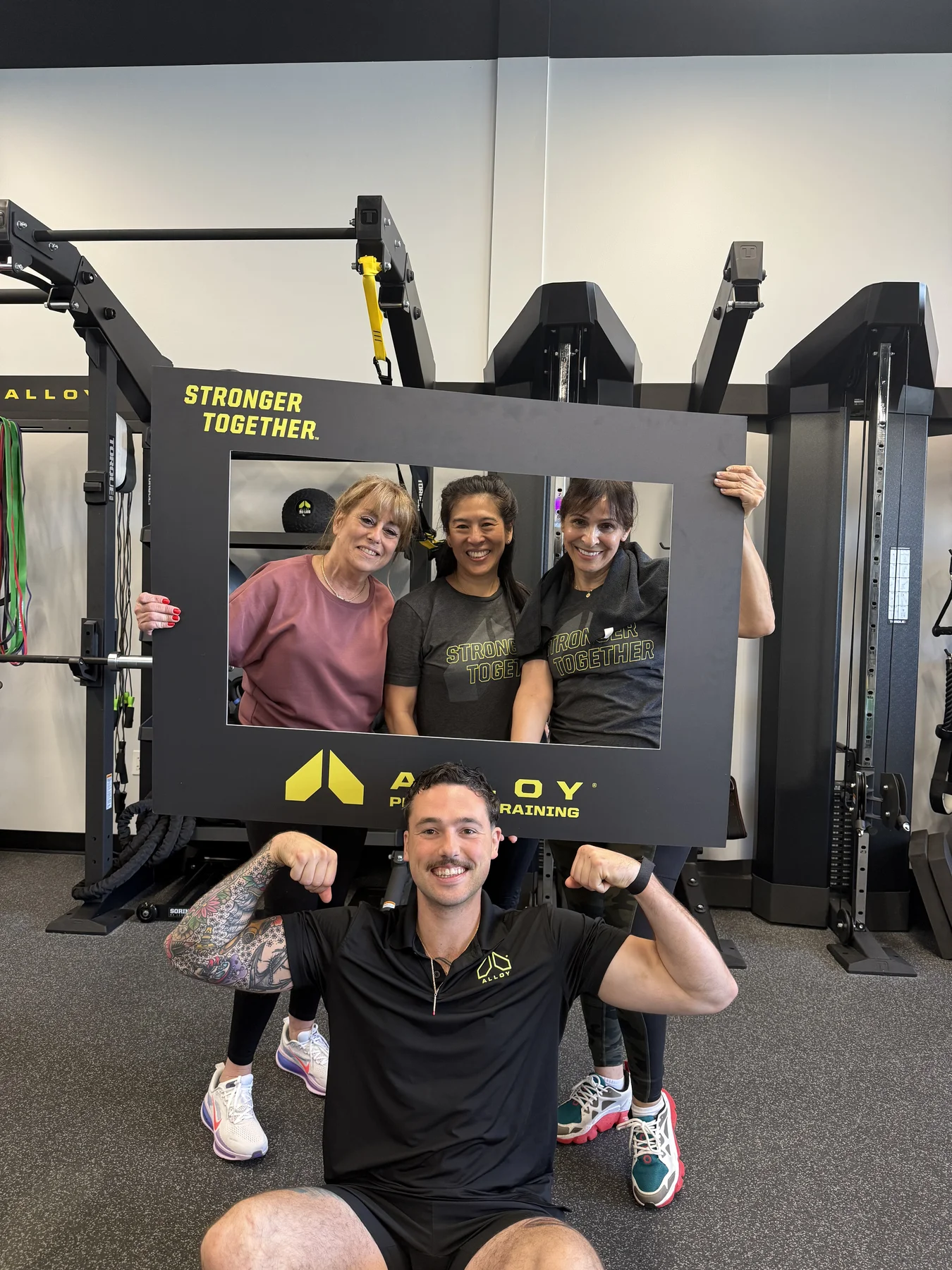
When people call the studio for the first time, one of the first questions I hear is some version of "So is this a class?" It is a fair question. Most people have only seen two options. You either pay for a one on one personal trainer, or you join a group fitness class and follow the same workout as twenty other people. Small group personal training sits between those two, and for adults over 40 it is often the best fit of the three.
What small group personal training actually means.
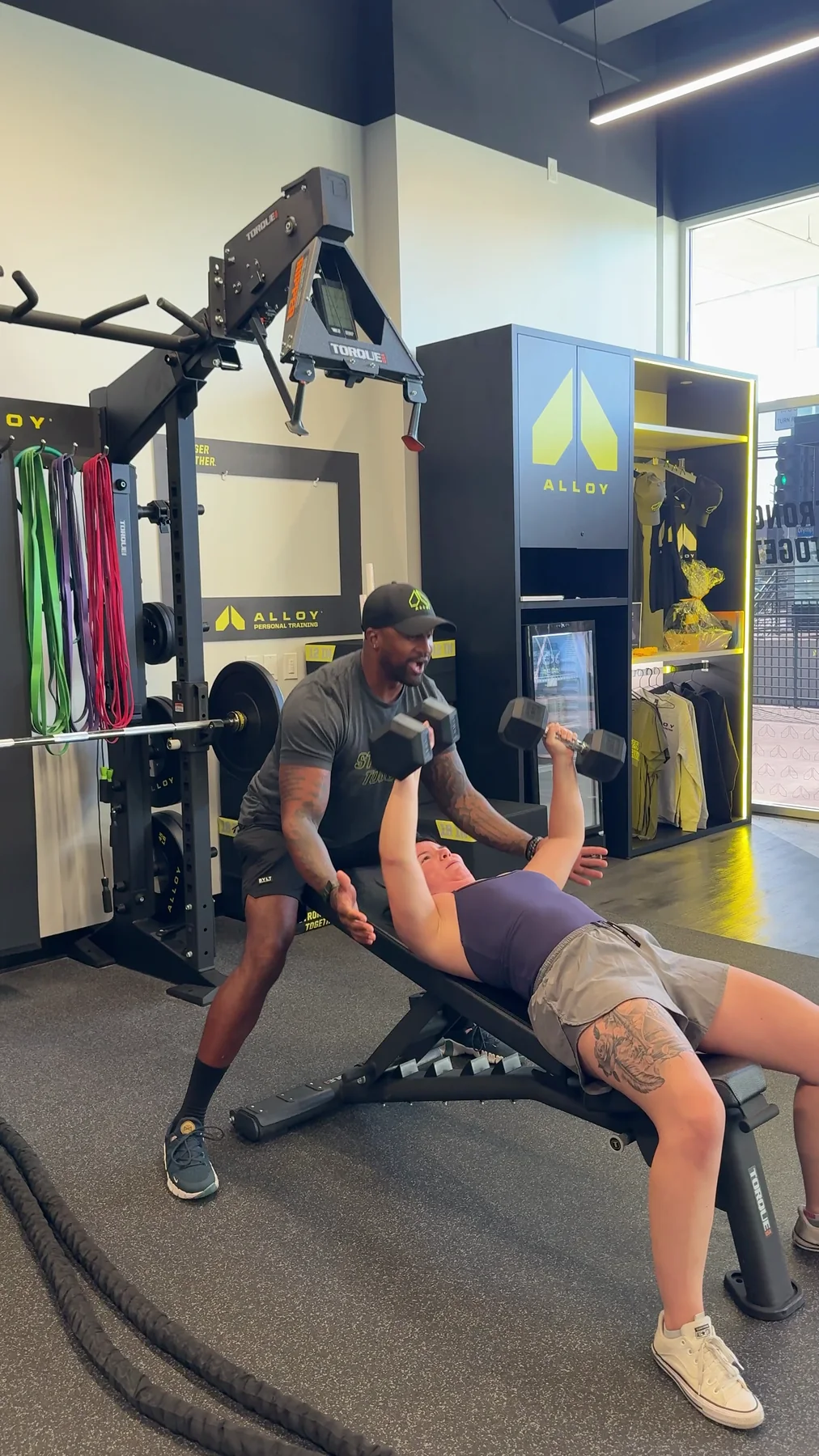
At Alloy, every session is capped at six people with one coach. Each member follows their own program, built around their goals, their training history, and anything their body needs us to work around. Six people might be in the room at the same time, but they are not all doing the same workout at the same weight. One member might be pressing heavy dumbbells while the person next to them works a modified version of the same movement because their shoulder does not like going overhead.
That is the real difference from a group class. In a class, the workout is the product, and the people adapt to it. In small group personal training, the person is the product, and the workout adapts to them.
Every session follows the same basic structure. A five to seven minute dynamic warm up. Six exercises paired into supersets, each one scaled to the member doing it. A cardio or core finisher to close it out. The structure stays the same so members always know what to expect when they walk in. The exercises, the loads, and the progressions are what change from person to person.
Why not just hire a one on one trainer?
One on one training is a great service. It is also expensive, and for a lot of people it does not hold up over time. The cost alone pushes most people to stop after a few months, and strength is built over years, not months. Small group training gives you a coach, an individualized program, and real progress tracking at a price that makes long term training realistic.
There is also something one on one training cannot give you, and that is the room. Training next to the same handful of people every week changes the experience. Someone notices when you add weight to your deadlift. Someone asks where you were last Thursday. That is hard to recreate when it is just you and a trainer.
Andy, one of our members, described it well. He called it group training, but said the individual attention and care from the coaches makes it feel personal. That is exactly the balance we are trying to strike every session.
Why not just take a group class?
Group classes are fun, social, and affordable. They are also built for the average person in the room, and there is no average person over 40. By this stage of life, most of us carry some history. An old knee injury. A lower back that tightens up after a long flight. Years away from any kind of structured training. An instructor leading twenty people cannot adjust every movement for every person, and they usually have no way of tracking whether you are getting stronger month to month.
Shradha, another member, told us that when she first called the studio, semi personal training sounded like the best of both worlds: real attention without feeling lost in a class. I hear a version of that from a lot of new members. They did not want to be the person in the back of the room trying to keep up with a workout that was not built for them.
What the research says about training with other people.
The social side of training does more than make it enjoyable. A 2017 study in the Journal of the American Osteopathic Association followed 69 medical students for 12 weeks. Students who trained in a group setting reported a 26.2 percent drop in perceived stress, along with improvements in mental, physical, and emotional quality of life. Students who trained alone or with one or two partners spent roughly twice as long working out, but the only significant improvement they reported was in mental quality of life (Yorks et al., Journal of the American Osteopathic Association, 2017).
That is one small study in a young population, so it is not the final word. But it lines up with what we see at the studio every day. Members tend to leave a session in a better mood than they arrived in, and the group is a big part of why.
It also tends to spread. Heather, one of our members, ended up bringing a friend in to train alongside her. That happens more often than you might expect in a small group setting. People who find a place that works for them want the people they care about there too.
Who small group training is right for.
Small group personal training tends to be the right fit if a few of these sound like you:
You want a coach and a program built for you, without paying one on one prices.
You have an injury history or physical limitations and need movements adjusted to your body.
You have been away from training for years and do not know where to start.
You want to be around other people while you train, without getting lost in a crowd.
You want someone tracking your progress so you know the work is paying off.
If you are in West LA, Santa Monica, Culver City, or Brentwood and trying to figure out which of the three options fits you, the simplest way to find out is to come in for a Starting Point Session. It includes an InBody scan, a mobility assessment, and a short workout, so you can feel exactly how a small group session runs before you decide anything.
Sources
Yorks, D.M. et al., Journal of the American Osteopathic Association, 2017 study on group fitness, perceived stress, and quality of life